

The latest weekly Niño 3.4 reading, centered on 14 October 2026, reached +3.3°C above normal, and all 27 models in the Columbia IRI ensemble forecast a very strong event through the 2026–27 winter, persisting into late spring 2027. NOAA has held an El Niño Advisory since mid-year and in September put the chance of a very strong event above 90%.
Nigeria does not feel El Niño as sharply as Peru or Indonesia. But it starts from a fragile position: the Alliance for a Green Revolution in Africa (AGRA) estimated in July that 36.3 million Nigerians face crisis-level or worse food insecurity, the largest number in Africa. Any shock to harvests or imports lands on households and balance sheets that have little room to absorb it.
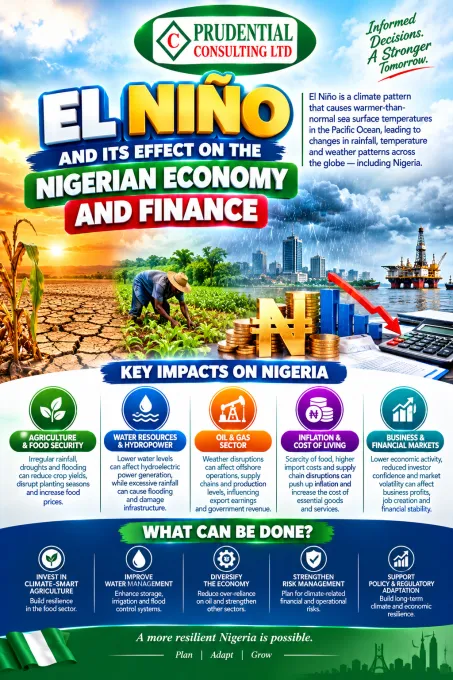
How El Niño reaches the Nigerian economy
El Niño rarely acts alone. Analysts at MCB Group note that it tends to amplify pressures already in the system rather than drive a crisis by itself, and Nigeria's food, energy and currency pressures were already there.
| Channel | What can happen | Why finance teams should care |
|---|---|---|
| Food and inflation | Erratic rain and dry spells cut yields of maize, millet, sorghum and rice, mostly rain-fed in the north. The AfDB warns maize prices could double in some African markets. | Food carries a heavy weight in Nigerian household budgets, so supply shocks pass quickly into headline inflation and input costs. |
| Power and water | Lower rainfall in the Niger and Benue basins can reduce water behind Kainji, Jebba and Shiroro dams. | Less hydropower raises reliance on diesel and gas generators, lifting operating costs. |
| Currency and trade | Higher food import needs can widen the external deficit. | Import-dependent businesses face more naira volatility and higher landed costs. |
| Growth and public finances | The AfDB estimates the worst-hit African countries could lose 1–2% of GDP, and Africa's adaptation needs could double to about $100 billion a year. | Weaker growth and relief spending can squeeze budgets, and stagflation-like conditions can keep interest rates higher for longer. |
The 2015–16 El Niño is a useful reference. Retail white maize prices rose 98% in South Africa and 41% in Zambia between March 2015 and March 2016, even though other factors also moved their currencies.
What to expect in Nigeria
Businesses. Agro-processors, food and beverage makers, retailers and transporters are most exposed to higher raw-material and logistics costs. Companies that lend to or buy from farmers face more credit and supply risk, especially in the north. Firms running their own power should budget for higher fuel use if grid supply weakens.
Households. Higher food prices reduce spending on everything else, which can slow demand for non-food goods and services and raise loan repayment stress.
Banks and investors. If food inflation rises while growth softens, borrowing costs may stay elevated longer than planned. That affects loan pricing, bond yields and the cost of working capital.
A finance checklist for the next 90 days
- Re-run your 2027 budget with a food-price and fuel-cost shock scenario, and note the break-even point.
- Review supplier and customer contracts for price-adjustment clauses, and lock in key inputs where it is affordable.
- Build a working-capital buffer or secure a standby credit line before rates and demand for credit move.
- Stress-test receivables and loans tied to agriculture, and tighten credit terms for the most exposed customers.
- Review naira exposure on imported inputs and decide whether hedging or earlier purchasing makes sense.
- Budget for backup power and check that insurance covers crop, stock and business interruption losses.
- Track NiMet advisories and monthly NOAA ENSO updates, and set a date to revisit these assumptions.
What we do not yet know
The link between El Niño and Nigerian rainfall is weaker and less consistent than in other regions, and Atlantic sea temperatures can amplify or offset it. NiMet's 2026 Seasonal Climate Prediction expected normal annual rainfall in most parts of the country, but also erratic rainfall, prolonged dry spells and a severe August break in some areas. The AfDB's $10–20 billion cost estimate covers Africa as a whole, not Nigeria alone.
The honest planning stance is to prepare for the downside without assuming it. Prudential Consulting can help you model these scenarios for your business.
This article is general information and not financial advice.
Extra Media
RELATED BLOG POSTS

Energy Prices, Inflation and the Global Cost of Doing Business

Tariffs Are No Longer Just a Trade Policy — They Are a Business Cost

AI and the Future of Accounting


The New Era of Reciprocal Trade

Tariffs Are Becoming a Major Business Cost Variable
Comments