

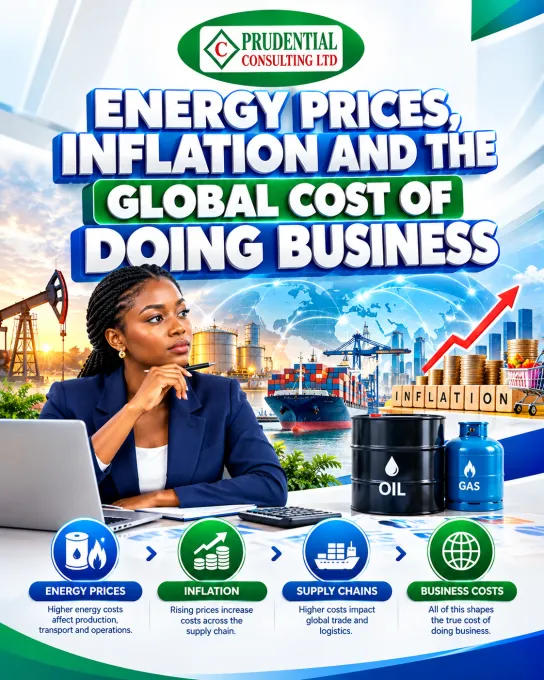
Energy prices and inflation move together, and both move the real cost of running a business. In Nigeria, energy inflation climbed to 4.69 percent after a July 2026 low, according to recent data, even as the Central Bank of Nigeria projects broader disinflation and economic growth of 4.49 percent for 2026. For a business owner, these are not abstract macroeconomic figures; they translate directly into higher input costs, tighter margins, and a greater need for precise financial and tax planning. How Energy Prices and Inflation Interact With Business Costs Energy costs feed into inflation through multiple channels: higher fuel and electricity costs raise transportation and production expenses, which in turn push up prices across the wider economy. For Nigerian businesses, this creates a compounding effect: Direct cost increases from fuel, electricity, and energy-dependent logistics. Indirect cost increases, as suppliers pass on their own rising energy costs through higher prices for raw materials and services. Margin pressure, where competitive pricing limits how much of these increased costs can be passed on to customers. Working capital strain, as businesses need more cash to cover the same volume of goods or services at higher input prices. Step-by-Step: Managing the Cost of Doing Business Amid Energy and Inflation Pressure 1. Track energy and inflation-linked costs separately in your books. This allows you to see clearly how much of your cost increase is energy-driven versus broader inflation. 2. Review pricing at shorter intervals. Annual or even quarterly pricing reviews may not keep pace with energy cost volatility; more frequent review protects margins. 3. Classify capital energy investments correctly. Investments in more efficient equipment, solar power, or backup systems should be treated as capital expenditure and claimed through capital allowances under the Nigeria Tax Act, rather than expensed immediately. 4. Maintain accurate, current cost of sales records. Inflation-driven cost increases must be reflected accurately to ensure taxable profit is neither overstated nor understated. 5. Consult a professional firm to align cost management with tax planning. Energy and inflation pressures affect both operational decisions and tax outcomes, and the two should be planned together. Why This Matters to Nigerian Taxpayers Inflation and energy cost volatility make it easy for a business's cost base to drift out of alignment with its actual reported figures if records are not updated regularly. A business that fails to track rising costs accurately risks either overpaying tax on profit that has already been eroded by inflation, or understating costs in a way that invites scrutiny from the NRS. Tax Implications Energy and inflation-driven increases in deductible business expenses should be reflected accurately in tax computations as they occur, supported by proper documentation. Capital investment in energy efficiency or alternative power sources is generally subject to capital allowance treatment under the Nigeria Tax Act, spread over the asset's useful life. Businesses facing significant margin compression from rising costs should ensure their financial statements and tax filings reflect this accurately, rather than relying on outdated cost assumptions. Why Every Business Should Comply with Tax Regulation A business operating in a high-inflation, energy-volatile environment benefits most from precise, current financial records. Accurate compliance protects the business both from overpayment of tax during difficult periods and from the penalties attached to inaccurate filing under the Nigeria Tax Administration Act. The Advantage of Professional Guidance A professional consulting firm helps a business: Track and classify energy and inflation-driven cost increases accurately. Apply correct capital allowance treatment to energy efficiency investments. Align pricing and cost management decisions with sound tax planning. PRUDENTIAL CONSULTING LIMITED helps businesses manage the real cost of energy and inflation through accurate financial record-keeping and sound tax compliance. Relevant Tax Law Nigeria Tax Act, 2025, including provisions on deductible expenses and capital allowances. Nigeria Tax Administration Act, 2025. Frequently Asked Questions Does rising inflation change how often a business should review its tax position? Yes. More frequent review helps ensure taxable profit calculations reflect current costs accurately, rather than outdated assumptions. Can a business claim relief for investing in more energy-efficient equipment? Generally, yes, through capital allowances claimed over the asset's useful life, rather than a full deduction in the year of purchase. How does energy inflation affect taxable profit? Rising energy costs increase deductible expenses, which lowers taxable profit, provided the costs are accurately and properly documented. Where can I get further assistance? Contact Professional Tax Consulting Firm in Lagos, Nigeria on: 📞 WhatsApp: 08056219998 📧 Email: info@prudentialconsulting.com.ng 🌐 Website: https://www.prudentialconsulting.com.ng This article is for general informational purposes and does not constitute complete investment, tax, or legal advice. Please consult a qualified professional before making financial or tax decisions specific to your business.
Extra Media
RELATED BLOG POSTS

No Global Taxes: What Happens to International Tax Cooperation?
Comments